
Three Low-Risk Science Investigations for Classes 6–8
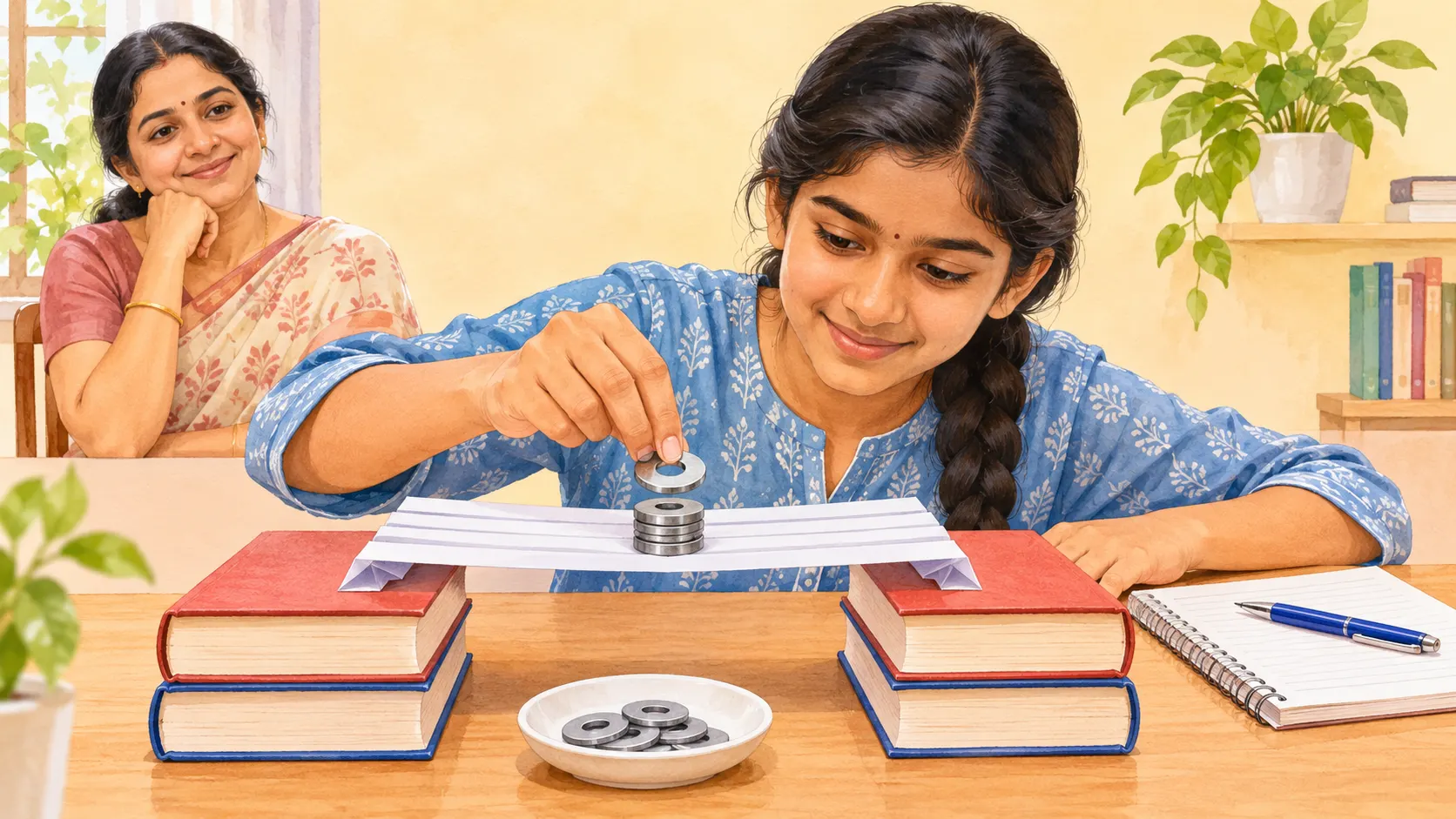
These small investigations use paper, water and observations of plants. Choose an activity with an adult, check materials for the child’s needs and follow school guidance. They do not involve pressure rockets, heating paper or flammable liquids.
1. Compare paper bridge shapes
Support one sheet of paper between two equal-height stacks of books. Keep the gap, paper size and load type the same. Compare a flat sheet with a folded sheet and add small identical counters one at a time. Keep the setup low over a clear table and stop before items fall. Do not use valuable or breakable objects.
- Question: does changing the paper shape change the load it supports?
- Independent variable: paper shape. Dependent variable: number of identical counters supported under a stated rule.
- Controls: span, paper size, paper type and placement of counters.
- Repeat with fresh sheets and record every result, including a shape that performs poorly.
2. Observe dissolving without heating
Use equal small amounts of table salt in equal volumes of room-temperature water. Compare stirring with no stirring, keeping the containers and timing method the same. Record how long visible crystals remain under each condition. Do not taste the samples or add cleaning products. Dispose of the small samples appropriately and wash hands.
This compares dissolving rate under the chosen conditions, not a chemical reaction or the maximum amount that can dissolve. If crystals remain, state that observation rather than forcing the expected result.
3. Record seed germination
With an adult, choose suitable untreated seeds and observe them on damp paper in a clear container. Keep conditions consistent, photograph or sketch changes and record the date. Avoid overwatering; discard material if mould appears and do not eat the seeds or seedlings. Follow school advice if allergies or other sensitivities apply.
A simple observation diary can describe when roots and shoots become visible. To compare conditions, change only one factor and use several seeds per group; one seed alone cannot establish a reliable general conclusion.
Record evidence, not a desired result
- Write a question and prediction before starting.
- Record materials, method, observations and units where appropriate.
- Keep results even when they disagree with the prediction.
- Explain a limitation and suggest a change for a later trial.
Choose the right setting
Activities involving heat, flames, pressure, mains electricity, unknown chemicals or specimen preparation belong under appropriate school laboratory supervision. See science-fair project ideas for planning a measurable question.