
Science Fair Project Ideas for Class 8-10 Students
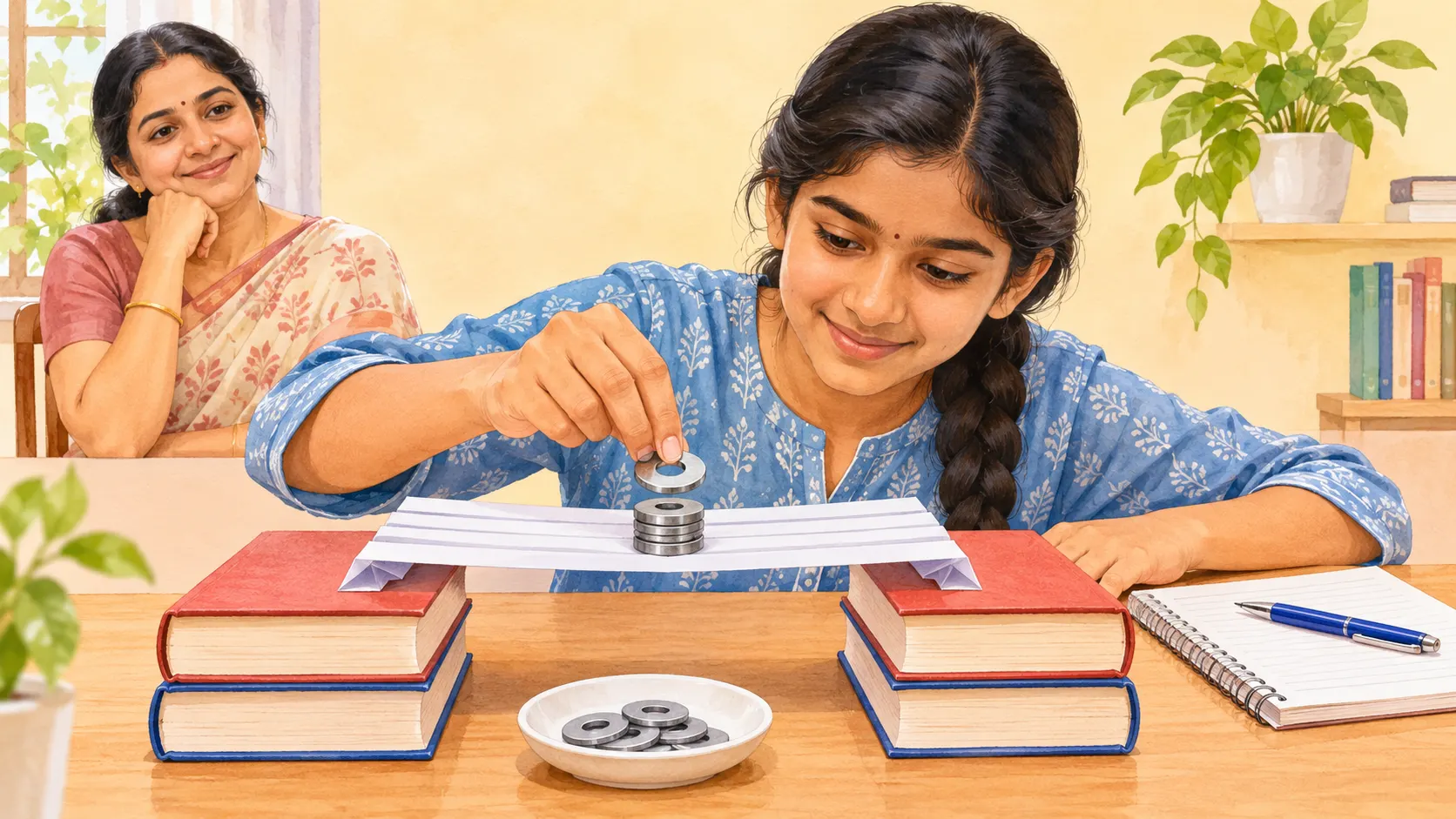
A useful science fair project tests one question and reports what happened. These 15 starting ideas favour simple materials and observations. Ask your teacher to approve the method and materials before you begin.
Choose a question you can measure
Write a question that changes one factor: for example, “How does the shape of a paper bridge affect the number of identical coins it holds?” Keep the other conditions the same, repeat each test and record the results, including results that disagree with your prediction.
Five physics and engineering ideas
- Paper bridges: compare flat, folded and accordion shapes using equal sheets and the same support gap.
- Paper helicopters: change blade length and time each descent from the same safe height agreed with your teacher, repeating and averaging the times.
- Pendulums: compare string lengths using a small lightweight bob, the same release angle and repeated timing.
- Rolling objects: compare travel distance on different surfaces using the same toy car and starting ramp.
- Insulation: compare how quickly identical containers of cold water from the refrigerator warm up with different outer wraps, measuring the temperature at fixed intervals.
Five materials and chemistry observations
- Dissolving sugar: compare dissolving time in room-temperature water with different stirring routines.
- Evaporation: compare water remaining in equal containers at different indoor locations.
- Absorbency: compare equal-size paper samples using the same amount of plain water.
- Salt crystallisation: observe how room-temperature salt-water samples change as water evaporates; do not taste samples.
- Mixture separation: compare methods for separating a dry rice-and-lentil mixture and record time and recovery.
Five biology and environment ideas
- Seed germination: compare equal seed samples given measured amounts of clean water.
- Plant growth: compare similar seedlings with different light exposure while keeping soil and watering consistent.
- Leaf observations: compare leaf shapes from photographs or fallen leaves without disturbing plants.
- Packaging audit: count and classify clean household packaging over a fixed period; use no sharp or contaminated waste.
- Shade mapping: record the shaded fraction of the same marked outdoor area at different times from a safe observation point.
Worked method: a paper bridge investigation
- Use the same paper type and sheet size for each bridge shape. Support it between two low, stable stacks on a table.
- Keep the support gap fixed. Place identical coins gently at the centre, one at a time. Keep feet and breakable objects away from falling coins.
- Record the last load held before the bridge bends or slips. Use a fresh sheet for each repeat and perform at least three trials per shape.
- Make a table with bridge shape, trial 1, trial 2, trial 3 and mean load. Explain how you defined failure and any inconsistent placement.
- Compare the means without claiming one shape is always strongest: your conclusion applies to the materials and setup you tested.
What to put on the display
- Question and prediction
- Independent variable: the one factor you change
- Measured outcome and how you measure it
- Controlled conditions and repeat trials
- Results table and a clearly labelled graph
- Conclusion, limitations and one improvement