
Environmental Science Climate Change Class 9-10 | Claps Learn
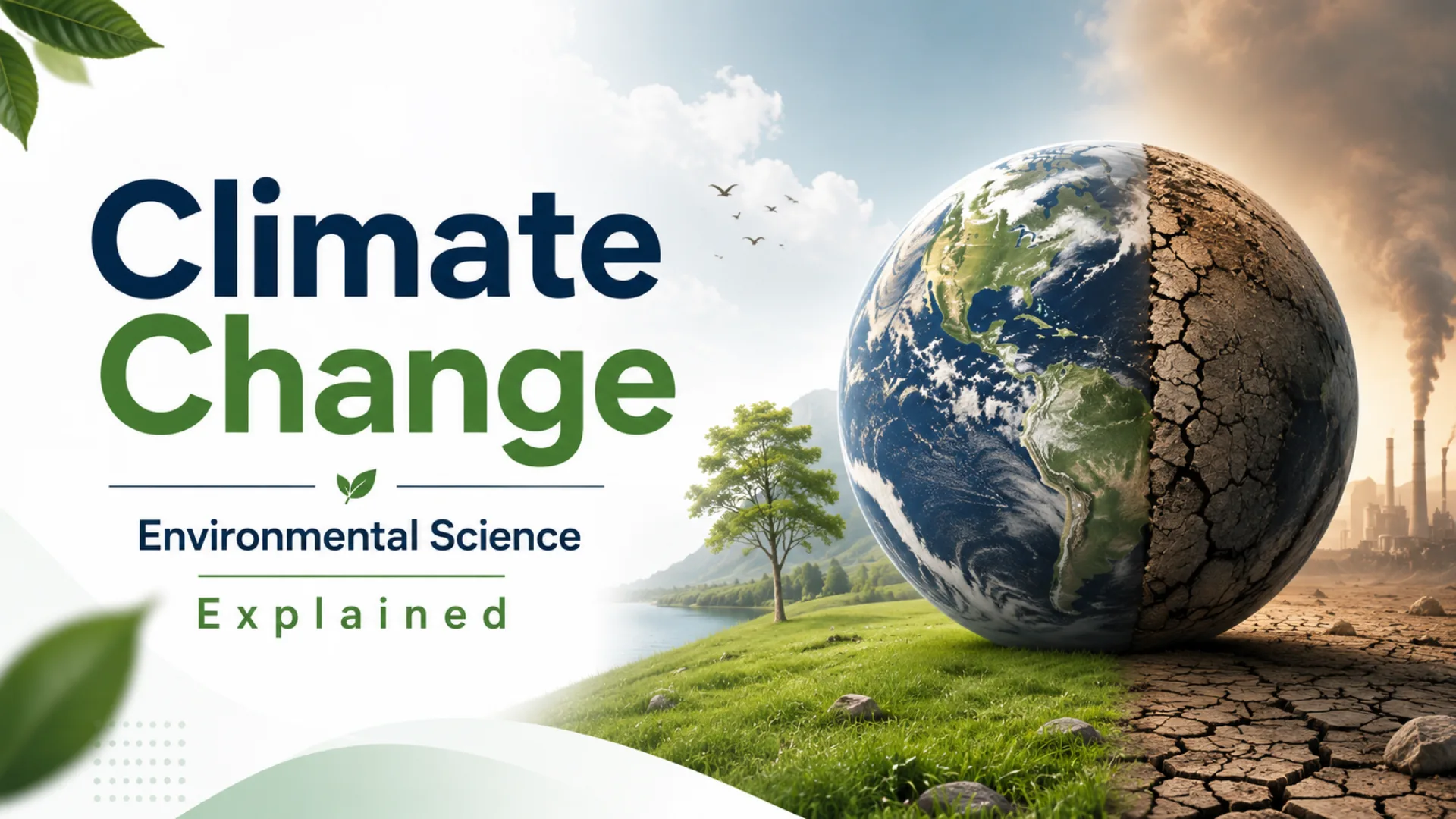
Climate change is one of the most pressing issues of our time, and it has become an important topic in the Class 9-10 science curriculum across CBSE, ICSE, and IB boards.
Weather vs Climate — Understanding the Difference
Weather is the day-to-day condition of the atmosphere in a particular place. Climate is the average weather conditions in a region over a long period — typically 30 years or more. Climate change refers to long-term shifts in these average conditions.
The Greenhouse Effect — Earth's Natural Blanket
The greenhouse effect is a natural process that makes Earth habitable. Without it, Earth's average temperature would be about -18C instead of the comfortable 15C we actually have. Solar radiation reaches Earth -> Earth absorbs some energy -> Earth re-emits energy as infrared radiation -> Greenhouse gases trap some heat.
The Greenhouse Gases
- Carbon dioxide (CO2): The largest contributor to enhanced greenhouse effect
- Methane (CH4): More potent than CO2 but shorter-lived in the atmosphere
- Nitrous oxide (N2O): Released from agricultural fertilisers
- Water vapour: The most abundant greenhouse gas
- CFCs: Extremely potent greenhouse gases
Causes of Climate Change
Since the Industrial Revolution, human activities have dramatically increased the concentration of greenhouse gases in the atmosphere: Burning fossil fuels adds billions of tonnes of CO2 to the atmosphere every year. Deforestation reduces the number of trees that absorb CO2.
Consequences of Climate Change
- Melting ice caps and glaciers
- Rising sea levels
- Ocean warming and acidification
- More extreme weather events
- Changing monsoon patterns in India
The Carbon Cycle
Carbon naturally cycles between the atmosphere, living organisms, oceans, and geological formations: Photosynthesis: Plants absorb CO2. Respiration: Plants and animals release CO2. Decomposition: Dead organisms release carbon. Ocean absorption: Oceans absorb CO2.
What Can Be Done?
- Reduce energy consumption
- Choose sustainable transport
- Reduce, reuse, recycle
- Conserve water
- Plant trees