
Building a Study Space That Actually Works for Kids
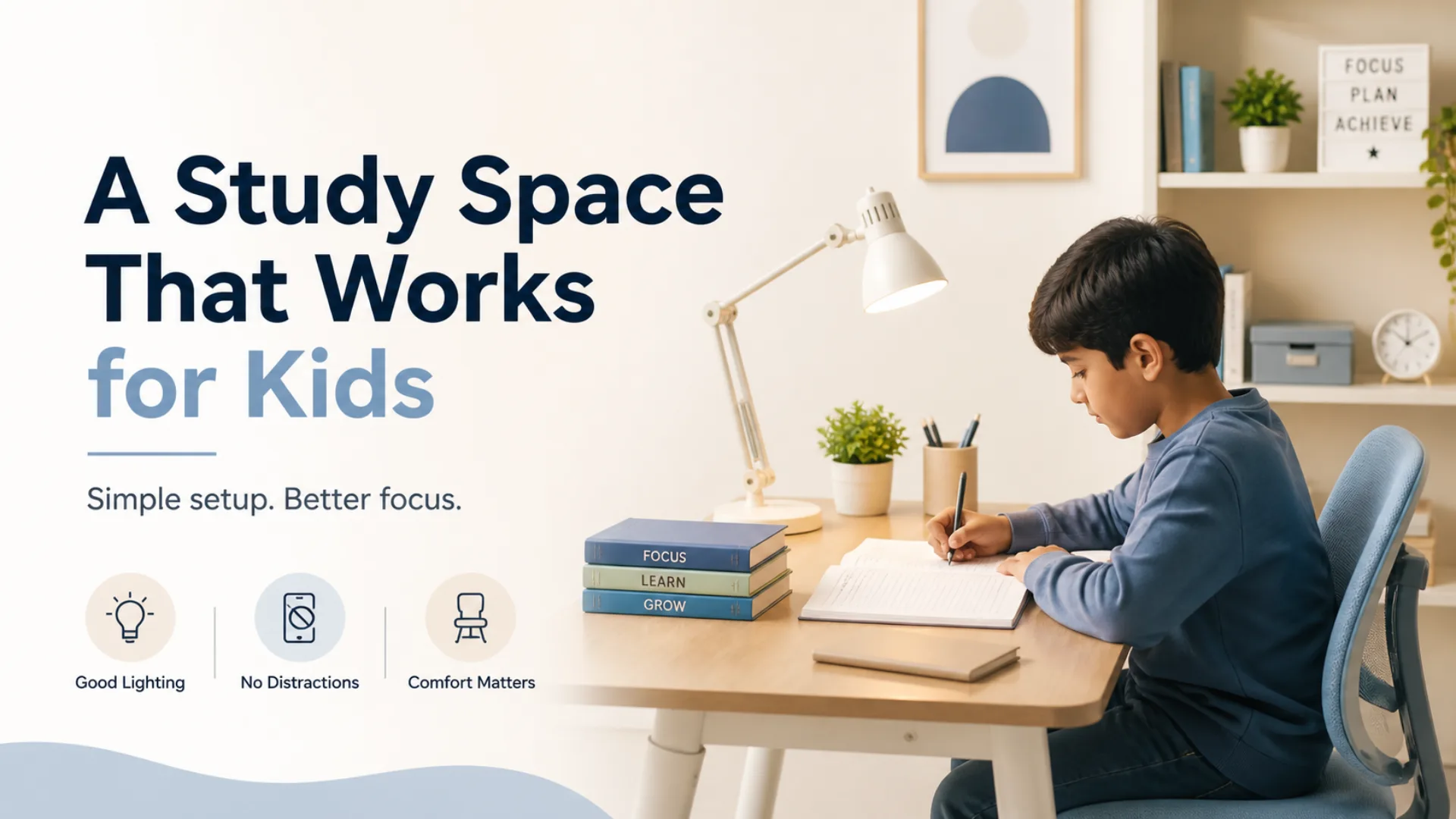
You have probably seen it before: your child hunched over the kitchen table, textbook open, tablet nearby, sibling running circles around them, notifications pinging from multiple devices. They have been "studying" for two hours but retain almost nothing. The problem is rarely effort or intelligence. More often, it is the environment. Research consistently shows that physical space directly affects concentration, information retention, and study habits. A well-designed study area does not require a dedicated room or expensive furniture. It requires thoughtful choices about light, noise, comfort, and distraction management.
Choosing the Right Location in Your Home
Natural light improves focus. Studies show students in naturally lit rooms score higher on memory tasks. Place the desk near a window if possible, but avoid direct glare.
Proximity to parents matters for younger children. For teenagers, some privacy is important, but a completely isolated room can lead to off-task behavior with no accountability.
Background noise has a sweet spot. Complete silence can be as distracting as chaos for some children. Moderate ambient noise can enhance creative tasks.
Furniture That Supports Learning
Desk and chair height are critical. When your child sits with feet flat on the floor and knees at roughly 90 degrees, forearms should rest comfortably on the desk surface.
Consider a standing desk or sit-stand converter. Many children concentrate better when they can shift positions.
Keep the surface clutter-free. A clean, bare desk reduces cognitive load. Only the current subject and necessary materials should be visible.
Managing Light, Noise, and Digital Distractions
- Light — Combine overhead ambient light with a directed desk lamp. Warm-toned bulbs reduce fatigue.
- Noise — Noise-canceling headphones for easily distracted children. White noise or instrumental music for some kids.
- Digital Distractions — Use website blockers during study time. Keep phones in another room entirely.
Organizing Supplies and Materials
Essential supplies should be always available: Pens, pencils, erasers, ruler, sharpener, and highlighters in a simple desk organizer.
Use a filing system for each subject. A wall organizer or desktop sorter with labeled sections keeps papers from scattering.
Tailoring the Space by Age Group
Ages 6-9 (Elementary)
Bright colors, visual schedules on the wall, short study intervals (15-20 minutes), heavy parental supervision. Use a visual timer.
Ages 10-13 (Middle School)
Increasing independence, subject-specific organization, more autonomy. Need room for textbooks, notebooks, and a device.
Ages 14-18 (High School)
Privacy becomes important. Comfortable seating for long study sessions, reliable internet, storage for exam materials.
FAQ: Study Space
How small can a study space be and still be effective?
Even a corner of a shared room can work. The key is consistency and reducing distractions, not square footage.
Should a child share a study space with a sibling?
It is possible but challenging. If sharing is unavoidable, use dividers, headphones, and separate storage.
My teenager refuses to study anywhere but their bed. Is that okay?
Working from bed is associated with poorer sleep quality and reduced focus. Encourage a proper desk setup while respecting autonomy.