
The Role of Parents in Supporting Homework Without Doing It for Them
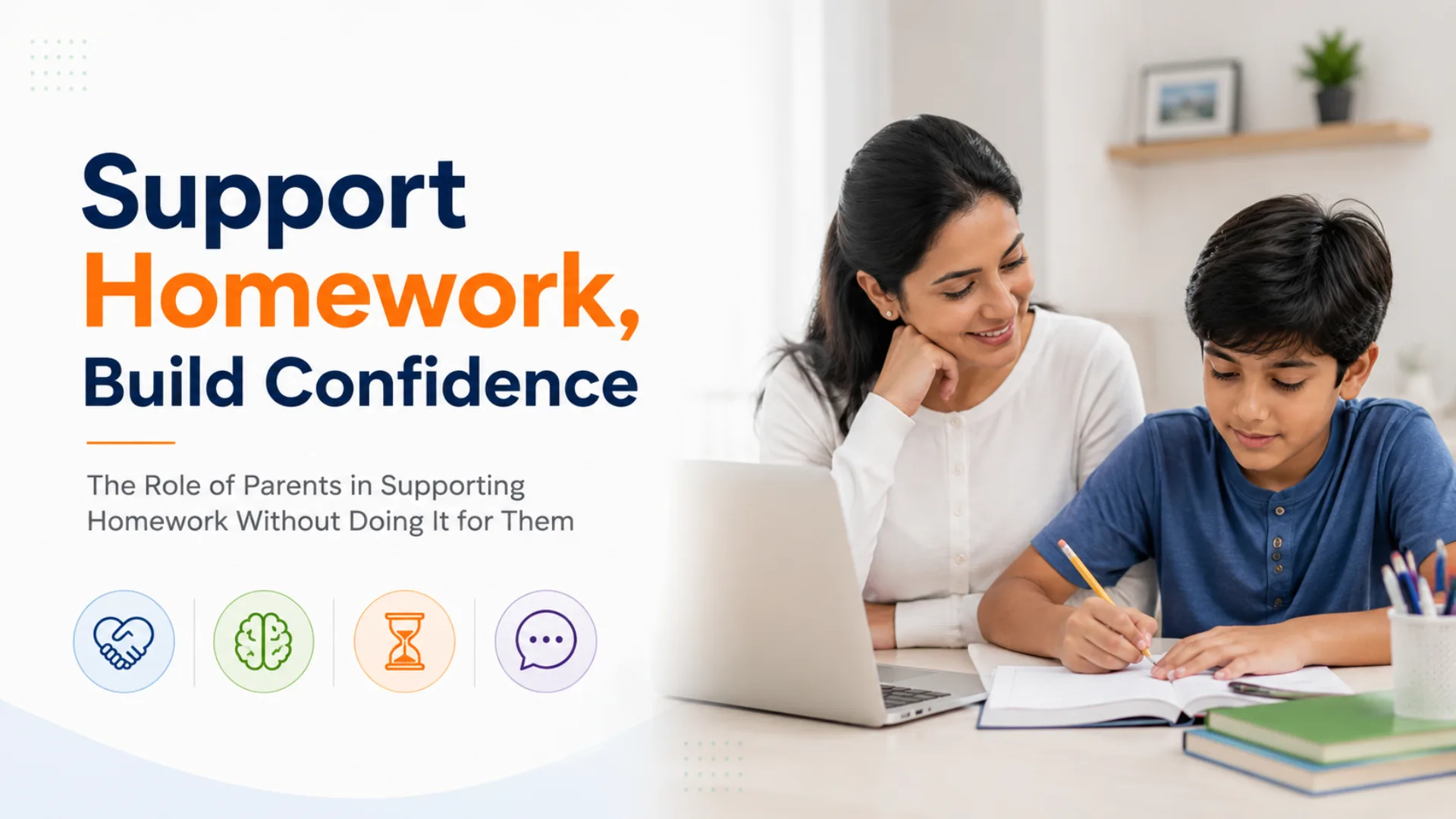
There is a fine line that many parents accidentally cross without realizing it. One moment you are clarifying a question, the next you have finished the entire assignment yourself. Then the teacher's notes come back showing your child performed below their ability, and the cycle continues. Supporting your child's homework is one of the most valuable things you can do as a parent. But it requires a specific skill set that most of us were never taught. The goal of homework is not completion; it is competency. A student who turns in a perfect assignment completed entirely by a parent has demonstrated nothing except that the parent can do fifth-grade math.
Why Parental Involvement in Homework Matters
Research on homework effectiveness consistently shows that parental involvement correlates with better academic outcomes, but the type of involvement matters enormously.
Children whose parents complete homework for them develop a dependency that compounds across grades. By middle school, these students cannot attempt problems independently.
Create the Right Environment for Independent Work
- Designate a homework station that is not the dinner table or bedroom couch
- Be in the room but not on a device yourself — your visible focus models the behavior
- Have water and a small snack available nearby
Use Questioning Techniques That Build Understanding
When your child hits a difficult problem, the instinct is to explain the answer. Resist this. The most effective parental support uses questions that guide the child back to their own reasoning.
- "What does the problem ask you to find?"
- "What information have you already been given?"
- "Have you seen a problem like this before?"
- "Can you re-read that section and explain it in your own words?"
Break large assignments into smaller chunks. A child who sees "complete pages 45-50" may feel overwhelmed. A child who sees "problems 1 and 2 first, then a stretch, then 3 and 4" can manage in stages.
Monitor Progress Without Taking Ownership
At the end of each session, ask your child to explain one or two problems they found challenging. If they can walk you through the reasoning, the learning happened.
Keep a simple homework log. Note subject, duration, difficulty, and whether your child needed help. Over time, this reveals trends.
Know When to Step Back and Bring in Professional Support
Some subjects are simply outside most parents' wheelhouse. A tutor provides structured support without the emotional complexity of the parent-child relationship.
ClapsLearn tutors are trained to guide students toward understanding rather than providing answers.
FAQ: Role of Parents in Homework
At what age should parents stop helping with homework?
By ages 10-12, parents should mostly be asking questions rather than explaining answers. By high school, parental help should be limited to logistics unless a subject causes consistent difficulty.
My child says they do not have homework. How do I verify this?
Check the school's online portal if one exists. Send a brief email to the teacher at the start of each week.
How do I respond when my child says "I give up"?
"I give up" usually means "I feel frustrated." Respond with: "Let's take a five-minute break and come back to this." Then ask them to identify the very first step they can do.