
How to Reduce Screen Time While Maintaining Good Grades
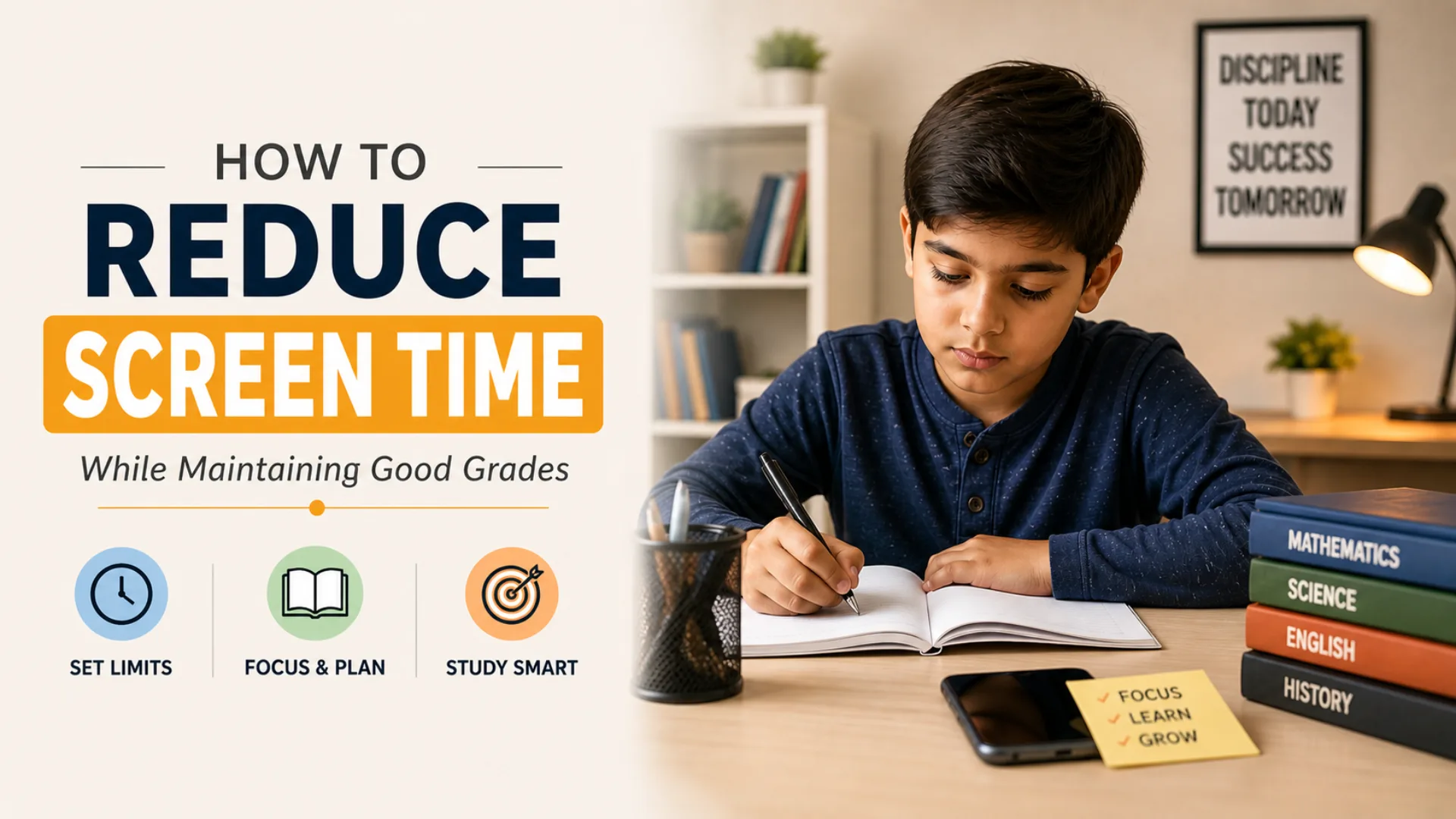
Every parent has been there. It is 9 PM, your child has been on their phone since dinner, and there is a science test tomorrow they have not reviewed. You take the device away and brace for the meltdown. The real goal is not screen time reduction for its own sake. It is helping your child develop a healthy relationship with technology while ensuring academic performance stays on track. Forcing a device cutoff without addressing the underlying reasons your child reaches for the screen will not build lasting habits. And removing screens entirely when they are integral to modern education can backfire.
Understanding Why Children Default to Screens
Unstructured downtime feels safer than looming assignments. When a child knows there is a difficult exam ahead and feels unprepared, avoidance is a natural stress response.
Social connection happens on screens. For teenagers especially, being offline means being left out. Any reduction strategy needs to account for the social cost.
Entertainment is engineered to be irresistible. Apps and games are built by teams whose job is to maximize engagement. You are not fighting your child; you are fighting billion-dollar retention strategies.
Create a Structured Evening Routine
The 90-minute wind-down model works well: Start with challenging academic work, after a structured study block of 60-90 minutes, allow a 15-minute supervised screen break. Key is that screen time is embedded as a reward, not a default.
Write the routine on a whiteboard in a common area. Visual schedules reduce the friction of constant parental reminders.
Keep devices out of bedrooms after 8 PM. Charge phones in a central location. This single habit improves sleep quality and makes the evening routine easier to enforce.
Use Screen Time Analytics to Start a Conversation
Before setting new rules, look at the data together and ask your child what they notice. Ask: Which app takes up most of your time? Do you feel good about how you spent your time online today? What would a better balance look like for you?
Focus on the High-Stakes Hours
You do not need to monitor every hour of the day. Focus on protecting the window when most of the real learning happens: after-school from 4 PM to 8 PM.
Weekend and evening leisure time can be more flexible. The goal is not to eliminate recreational screen use. It is to ensure academics do not suffer.
Replace Passive Consumption with Active Screen Use
Passive scrolling is far more detrimental to focus than using a device to create, communicate, or learn actively.
Encourage your child to use screens for projects related to their passions. A child interested in gaming can learn video editing. The screen is the same device, but the cognitive engagement is entirely different.
FAQ: Reducing Screen Time
My child says they need the phone for homework. How do I handle that?
Homework does not require a phone with social media access. Use parental controls to allow only educational websites during study hours.
Does using an online tutor count as screen time?
Structured learning sessions on a platform like ClapsLearn are qualitatively different from recreational screen use. These are goal-oriented, tutor-guided sessions.
What if reducing screen time causes anxiety or withdrawal symptoms?
Some children have genuine dependency on screens for emotional regulation. Consider a gradual taper rather than an abrupt cutoff.