
How to Help Your Child Overcome Math Anxiety
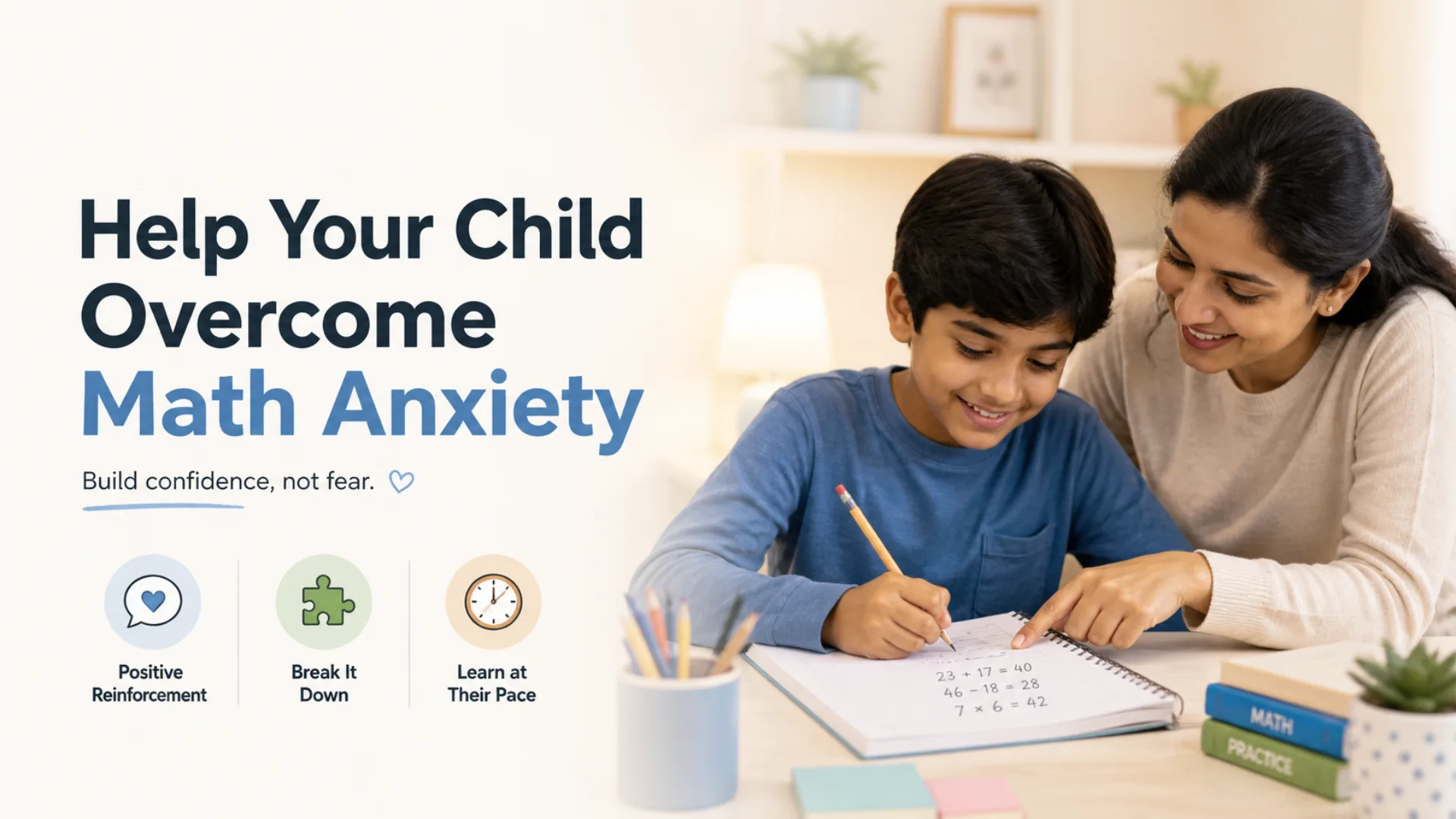
She freezes when she sees a math test coming. Her heart races. Her palms sweat. She tells you she "just cannot do math" — words she would never say about reading, drawing, or playing her favorite sport. This is not laziness. This is not a lack of intelligence. This is math anxiety. Studies estimate that up to 30% of students experience some form of math anxiety. It affects children of all ages, all ability levels, and all backgrounds. And unlike other academic challenges, math anxiety often goes unrecognized. But here is what the research is increasingly clear about: math anxiety is not a reflection of math ability. It is an emotional response that, when addressed with the right strategies, can be overcome.
What Is Math Anxiety, Really?
Understanding the Fear Response
Math anxiety is a psychological response that triggers the brain's fear centers. When a person with math anxiety encounters a math problem, their brain goes into fight-or-flight mode. This releases stress hormones that impair working memory — the mental workspace used for solving problems.
Math Anxiety vs. Math Ability
Math anxiety is independent of math ability. A child can be highly capable at math and still experience severe math anxiety. Sometimes the brightest children suffer the most because they feel pressure to perform.
The Self-Fulfilling Cycle
Math anxiety creates a destructive cycle: Anxiety leads to avoidance. Avoidance leads to less practice. Less practice leads to poorer performance. Poorer performance leads to more anxiety. Breaking this cycle requires addressing both the emotional component and building genuine competence.
Signs Your Child May Have Math Anxiety
- Immediate Emotional Shutdown — Becomes visibly upset at homework time
- Negative Self-Talk — "I am so bad at math," "I cannot do this"
- Physical Symptoms — Headaches, stomachaches, nausea around math activities
- Perfectionism Paralysis — Refuses to start a problem for fear of getting it wrong
- Sudden Performance Drops — Grades declining despite consistent effort
Causes of Math Anxiety in Children
- Negative Early Experiences — A specific traumatic moment in early schooling
- Pressure from Parents and Teachers — Adult anxiety that children internalize
- Timed Tests and High-Stakes Assessments — Working memory consumed by fear
- Teaching Methods Mismatched to Learning Style — Visual learner taught auditorily
- Comparison to Others — Being compared to siblings or classmates
Practical Strategies to Help Your Child
- Reframe Your Own Language About Math — Replace "I was never good at math" with "Math is a skill"
- Separate Emotion from Learning — Acknowledge the feeling, then provide support
- Make Math Low-Stakes — Practice math in everyday contexts without grades or pressure
- Celebrate Mistakes as Learning Opportunities — "Mistakes help us learn"
- Build Confidence Through Success Loops — Start with easy problems, celebrate wins
- Use Physical and Visual Tools — Manipulatives, drawings, number lines
- Teach Deep Breathing and Relaxation Techniques — Before starting homework
- Establish a Positive Routine — Consistent, low-pressure math practice
How Online Tutoring Can Help
Online 1-on-1 tutoring is one of the most effective interventions for math anxiety. Individualized pacing, a safe space to make mistakes, patient specialized tutors, building a positive relationship with math, and personalized strategies.
FAQ: Math Anxiety
At what age does math anxiety typically develop?
Math anxiety can emerge as early as age 6-7 but most commonly manifests during Class 4-6 when math concepts become more abstract.
Is math anxiety a sign my child is not smart?
No. Math anxiety is an emotional response, not a measure of intelligence. Many highly intelligent children experience math anxiety.
Can math anxiety be cured completely?
Yes, many children overcome math anxiety entirely with the right support.