
Arabic Language Tutor Online: Learn Arabic | Claps Learn
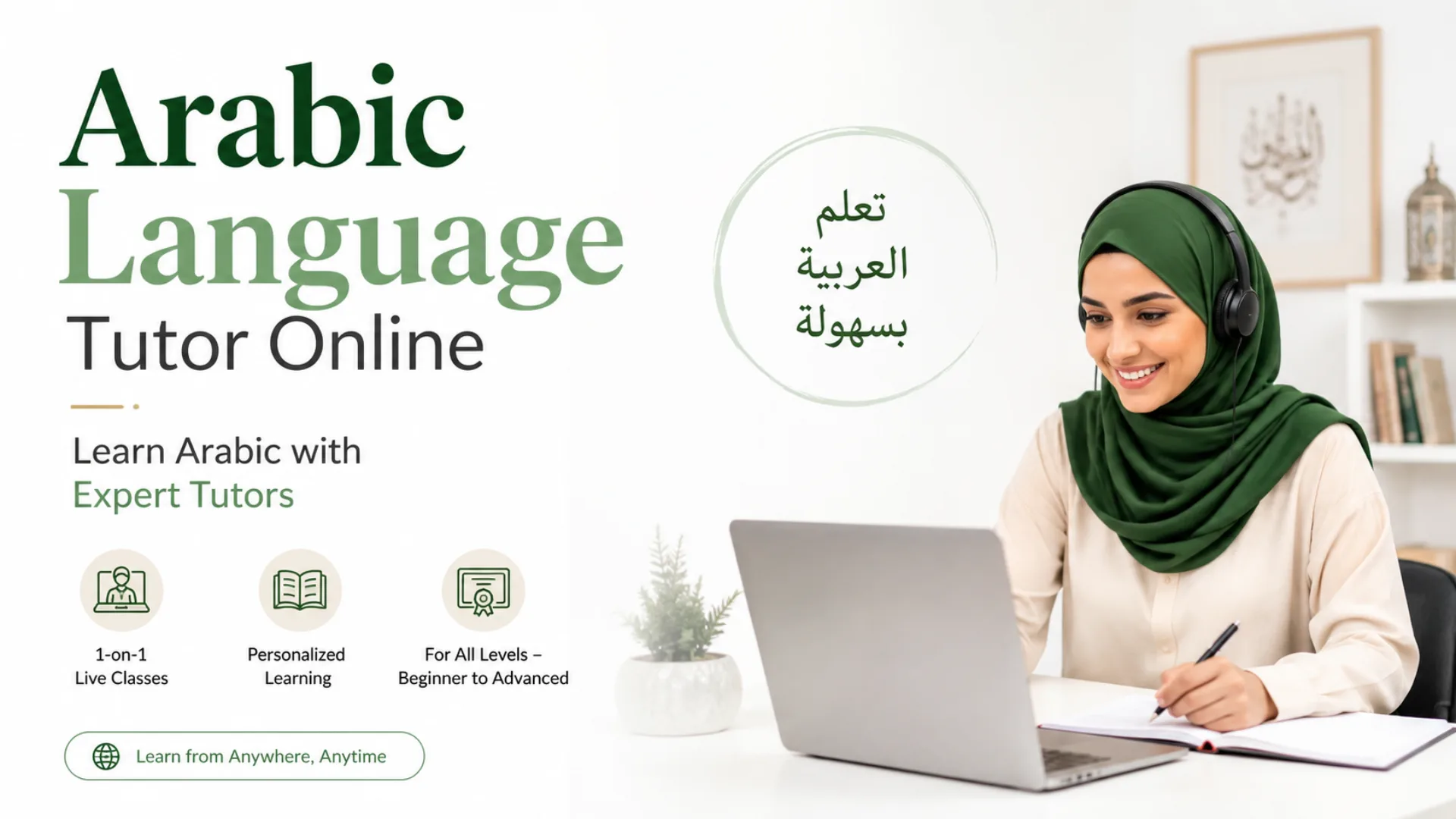
Arabic language tutor online - Learn Arabic
Why Learn Arabic Online in 2026: Market Demand
Arabic is one of the six official languages of the United Nations and is spoken by over 400 million people across 22 countries. From the bustling markets of Dubai to the diplomatic corridors of the Arab League, Arabic opens doors to business opportunities, cultural understanding, and academic excellence.
The demand for Arabic language skills has surged in recent years, driven by growing economic ties between India and Gulf Cooperation Council (GCC) countries, the presence of millions of Indian expatriates in the Middle East, and the increasing importance of Arabic in international relations and trade.
Types of Arabic: Understanding the Differences
Before seeking an Arabic language tutor, it's essential to understand the different forms of Arabic. Many students make the mistake of learning one type when they need another, leading to frustration and wasted time.
Modern Standard Arabic (MSA)
MSA, also known as Fusha, is the standardized form of Arabic used in formal writing, news broadcasts, educational settings, and official communications. If you're learning Arabic for academic purposes, CBSE/ICSE exams, or formal business communication, MSA is what you need. It's universally understood across Arab countries but rarely used in everyday conversation.
Gulf Arabic (Khaliji)
Gulf Arabic is the dialect spoken in Saudi Arabia, UAE, Qatar, Kuwait, Bahrain, and Oman. For students whose parents work in the Gulf region, or for those planning to work or do business there, Gulf Arabic provides practical, conversational skills that MSA alone cannot offer.
Egyptian Arabic (Masri)
Due to Egypt's influential media industry, Egyptian Arabic is widely understood throughout the Arab world through movies, music, and television. Many students start with MSA and add Egyptian dialect for cultural appreciation and media consumption.
What to Look for in an Arabic Language Tutor
Choosing the right Arabic language tutor is crucial for your learning journey. Here are the essential qualities to evaluate when selecting Arabic online tuition:
- Native or Near-Native Proficiency: Look for tutors who are native Arabic speakers or have lived in Arab countries for extended periods, ensuring authentic pronunciation and cultural context
- Educational Background: Formal qualifications in Arabic language—B.A. Arabic, M.A. Arabic, or equivalent—from recognized institutions
- Teaching Experience: Demonstrated experience teaching Arabic to non-native speakers, with patience and effective methodology
- Curriculum Alignment: For students, the tutor must understand CBSE, ICSE, Kerala Syllabus, or other board requirements for Arabic as a second or third language
- Structured Approach: A systematic lesson plan that builds from alphabets (huruf) to words (kalimat) to sentences (jumla) and eventually to conversational fluency
- Cultural Sensitivity: Understanding of Indian cultural context and the specific challenges faced by non-native speakers learning Arabic
Arabic for CBSE and ICSE Students: Third Language Preparation
Arabic is offered as a third language option in CBSE and ICSE schools, particularly in regions with significant Arabic-speaking populations and for students seeking to connect with their heritage. The Arabic curriculum for CBSE and ICSE focuses on reading, writing, grammar, and comprehension skills in Modern Standard Arabic.
CBSE Arabic Curriculum Overview
CBSE offers Arabic as an elective language at the secondary and senior secondary levels. The Code 003 Arabic course emphasizes classical and modern Arabic literature, grammar (nahw and sarf), translation skills, and creative writing abilities.
- Class 8-10 Arabic: Foundation building with Arabic alphabets, basic vocabulary, simple sentence construction, and introduction to Arabic grammar
- Class 11-12 Arabic Elective: Advanced literary analysis, translation work, essay writing in Arabic, and deep study of prescribed texts and poetry
- Examination Pattern: Focus on answer writing in Arabic, understanding of unseen passages, and grammar application
ICSE Arabic Curriculum
ICSE Arabic syllabus is comprehensive, testing students on their ability to read, write, and understand the language at an intermediate level. The exam includes grammar, composition, translation, and literature components.
- Grammar Focus: Arabic grammar structures including noun cases, verb conjugations, and sentence formation
- Composition Skills: Writing paragraphs, letters, and essays in Arabic
- Translation: Arabic to English and vice versa translation of passages
- Literature: Understanding and appreciation of Arabic prose and poetry
Beginner Arabic Online: Starting Your Arabic Journey
Starting Arabic as a beginner can feel daunting—the script looks unfamiliar, the sounds are new, and the grammar structure differs significantly from English. However, with the right Arabic language tutor, beginners can achieve conversational ability within months.
Arabic Alphabets (Al-Huruf)
The Arabic alphabet consists of 28 letters, each representing a consonant sound. Unlike the Latin alphabet, Arabic is written from right to left and has letters that change shape depending on their position in a word. A good beginner course should spend adequate time on alphabet mastery before progressing.
- Letter recognition in isolated, initial, medial, and final forms
- Short vowels (harakat): fatha, kasra, damma, and sukun
- Long vowels (huruf al-madd)
- Tanween (nunation) and shadda
- Letter connections and common letter groups
Building Vocabulary (Al-Mufaddalat)
Once alphabets and basic pronunciation are established, vocabulary building begins. Effective vocabulary acquisition focuses on high-frequency words, organized by theme (family, food, greetings, numbers, days, months) rather than random memorization.
Basic Grammar Structures (Al-Nahw al-Asasi)
Arabic grammar follows a subject-verb-object structure but with unique features like noun cases (raf', nasb, jar), verb conjugations based on person and gender, and a root-based word system. An experienced Arabic language tutor will introduce these concepts gradually, using comparison with English where helpful.
Arabic for Adults and Business Professionals
Adults learning Arabic have different needs than school students. Many seek practical, conversational Arabic for business communication, travel, or connecting with family members in the Gulf. Business Arabic focuses on specific vocabulary and communication styles used in professional settings.
Business Arabic Skills
Business Arabic courses cover vocabulary and phrases for meetings, negotiations, correspondence, banking, trade documentation, and professional networking. Understanding the cultural context of business communication in Arab countries is equally important.
- Formal greeting and introduction phrases used in business settings
- Vocabulary for contracts, agreements, and legal documents
- Meeting terminology and negotiation phrases
- Email and letter writing conventions in Arabic
- Cultural etiquette: appropriate titles, meeting protocols, and business card exchange
Arabic for Travel and Daily Life
For those planning to travel to or work in Arab countries, practical conversational Arabic covers essential situations: arriving at airports, checking into hotels, ordering food, asking directions, shopping, and emergency communication.
How Online Arabic Tuition Works at ClapsLearn
Our online Arabic language tutoring follows a structured approach designed for effective language acquisition, whether you're a complete beginner or preparing for board examinations.
Initial Assessment
Before starting, each student undergoes a brief assessment to determine their current Arabic level, learning objectives, and any specific requirements (board exam preparation, business Arabic, conversational Gulf Arabic). This helps us match you with the most suitable Arabic language tutor.
Personalized Lesson Plans
Based on your assessment, the tutor creates a customized curriculum that addresses your specific needs. For CBSE/ICSE students, this aligns closely with board requirements. For conversational learners, the focus shifts to practical vocabulary and real-world scenarios.
Interactive Live Sessions
Live sessions utilize video conferencing with screen sharing, digital whiteboards for Arabic script practice, and interactive exercises. The tutor demonstrates letter formations, conducts pronunciation drills, and engages students in dialogue practice. All sessions are recorded for review.
Practice Materials and Homework
After each session, students receive practice worksheets focused on script writing, vocabulary exercises, grammar drills, and reading comprehension. The tutor provides detailed feedback on submitted work, tracking progress systematically.
Regular Assessments and Progress Tracking
Periodic assessments evaluate progress and identify areas needing additional focus. For board exam students, mock tests follow the actual examination pattern. Parents receive progress reports and have access to a portal showing completed lessons and upcoming sessions.
Frequently Asked Questions About Arabic Language Learning
- Q1: How long does it take to learn Arabic? Basic conversational Arabic can be achieved in 3-6 months with consistent study (2-3 sessions per week). CBSE/ICSE exam-level proficiency typically requires 1-2 years of dedicated study. Mastery of business or literary Arabic is a longer journey requiring years of practice.
- Q2: Is Arabic difficult for English speakers to learn? Arabic is considered a Category IV language (most difficult) for English speakers by the US Foreign Service Institute. However, with expert Arabic language tutoring and consistent practice, learners can achieve their goals. The script and certain sounds present the initial challenge.
- Q3: Can I learn Arabic online without a tutor? While self-study resources exist, structured online Arabic tuition with a qualified tutor significantly accelerates learning. A tutor provides accountability, corrects pronunciation errors in real-time, and adapts lessons to your specific needs.
- Q4: What is the cost of Arabic online tuition? Arabic tuition at ClapsLearn starts at Rs. 500 per session for primary level, with pricing varying by grade level and session frequency. We offer demo sessions to help you find the right tutor before committing.
- Q5: Is Gulf Arabic different from the Arabic taught in CBSE/ICSE? Yes, significantly. CBSE/ICSE teaches Modern Standard Arabic (MSA) used in formal settings. Gulf Arabic is a spoken dialect with different vocabulary, pronunciation, and some grammar variations. Many learners study both for maximum utility.
- Q6: Can adults learn Arabic effectively? Absolutely. Adult learners often progress faster than younger students because they can use logical analysis, maintain motivation, and practice deliberately. Many of our Arabic students are working professionals or parents who learned Arabic successfully online.
- Q7: What equipment do I need for Arabic online tuition? A computer or tablet with stable internet, webcam, microphone, and headphones. For Arabic script practice, a notebook and pen are essential. Some students use graphics tablets for digital handwriting practice.
- Q8: How do I know if my Arabic tutor is qualified? Look for formal Arabic qualifications (degrees in Arabic language or literature), teaching experience with non-native speakers, and positive reviews or testimonials. At ClapsLearn, we verify all tutor credentials and teaching effectiveness before onboarding.
Conclusion: Begin Your Arabic Learning Journey Today
Whether you're a student preparing for CBSE Arabic exams, an adult seeking business opportunities in the Gulf region, or simply drawn to the beauty of Arabic language and culture, quality online Arabic tuition can help you achieve your goals. The key is finding an experienced Arabic language tutor who understands your specific needs and learning style.
Arabic is not just a language—it's a gateway to rich literary traditions spanning over a thousand years, to dynamic modern economies, and to connections with millions of people across continents. With the right guidance and dedication, you can unlock these opportunities.